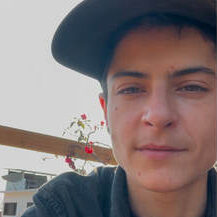

Located in northern New Mexico, in a village near Villanueva, filmmaker Barb Odell has been documenting powerful stories rooted in Spanish and Indigenous traditions. As the founder of All Girls Media, she has dedicated herself to sharing the practices of these local communities, thus upholding their resiliency, and continuing their legacies.
Being in a small, rural area, 12 miles down the road has challenges that shape the path of Odell’s work. Prior to being located that far remote, Odell spent time in crews on productions based out of Albuquerque, while living in Santa Fe. These 90-minute drives for 6am crew calls meant waking up at 3am and not getting home until after 8pm. Something had to give, which sparked the shift from indie work to documentaries.
Barb shares two stories that marked transformative moments in her career. The first is the project New Mexico Girls Make Movies (NMGMM), founded by educator Jolicyn Jansen. Leading up to this event, girls between the ages of 12-25 were invited to write scripts that would be casted and filmed. The winner would be selected based on the script, but anyone who submitted a script was involved to work on the production. This led to an all-female crew, where women were mentoring girls, without the pressures of men in a male-dominated industry. “Everyone was lifting each other up,” she recalls. “We wanted to support the girls, and in effect we ended up supporting each other.”
The other situation that marked the trajectory of Odell’s work was through a partnership with Cornerstone Community Partnerships, an organization that’s been fundamental to the adobe repair work that’s been going on in the area. It’s run by Jake, who will do demonstrations on how to make adobes, to show these traditions are alive and well. They also practice remudding, which maintains the adobe buildings. While Odell was there many years ago to document this, a man there who was previously appointed as their media producer went up to Odell and asked if she would take over his position. Of course she said yes, and that began her involvement with specifically the adobe and remudding practices happening throughout the region.
Working within Spanish and Indigenous communities comes with its own set of challenges, Odell admits. These communities are protective over their traditions, rightfully so. “They’re careful about who they allow in to represent them,” she explains. When I asked about particular points of contact for her documentary work, she clarified that there really aren’t formal structures or city councils; everything is on a case-by-case basis.
But what keeps her motivated is witnessing people’s responses to her films. A video she made for a local fiesta was shared widely, sparking warm memories among community members. “They’d say, remember that,’ or ‘I wish I could have been there,'” Odell shares. “The joy is in spreading that story. Odell’s passion for documenting stems from her belief in unbiased reporting. She doesn’t want to tell people what to think, but rather show them the truth and allow them to form their own opinions. “It’s always my goal to document what is happening,” she says. “If I don’t, the story is gone.”
historic adobe buildings, has spanned nearly a decade. From church remudding projects in Chimayó to demonstration homes at Luna Community College, Odell has been there with her camera, ensuring these community-led preservation efforts are seen and remembered.Odell sees documentary work not as a path to fame but as an act of preservation and witness. Her advice for aspiring filmmakers is simple: “Even with your iPhone it can be done,” she says. “It’s really not the equipment, it’s the person behind the camera.”Through All Girls Media, Barb Odell continues carving out space for community-based storytelling that keeps New Mexico’s traditions alive for future generations.