Staying Steady in Unsteady Times: A New Series for Parents, Young Adults, and All of Us Trying to Keep Going
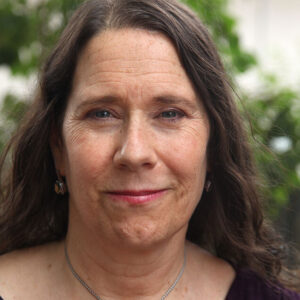
Part I: In a series by Elissa Chazdon, LMSW, Relationship Works, Albuquerque, New Mexico
Over the past several years, I’ve noticed a shift in the therapy room.
No matter someone’s age, background, or political leaning, there’s a common thread: a hum of anxiety about the state of our country.
Parents are unsure how much to say to their children. Young adults are questioning what kind of future they’re stepping into. Many of us feel worn down by the relentless cycle of breaking news, social injustice, and political conflict.
As a therapist with a background in trauma-informed, client-centered care, I’ve spent over 15 years supporting individuals and families in Albuquerque and the surrounding community. My work has always centered on helping people feel more grounded, more connected, and more empowered in their own lives. Recently, though, more sessions have included some version of the same question:
“How do we stay steady when everything feels so unsteady?”
This series is my attempt to respond to that question in a thoughtful, practical way.
In the coming weeks, I’ll be writing about four key areas:
1. For Parents: Supporting Children and Teens Through Political Unrest
From elementary school children overhearing adult conversations, to teens scrolling through social media, to young adults forming their own political identities—our children are absorbing more than we sometimes realize.
We’ll explore:
- How to talk about political unrest in age-appropriate ways
- How to respond to fear without amplifying it
- How to model grounded engagement rather than panic
- How to help young people build resilience without dismissing their very real concerns
The goal isn’t to tell children what to think. It’s to help them feel safe enough to think.
2. For Young Adults: Finding Realistic Hope
Many young adults are carrying a heavy mix of awareness and disillusionment. They care deeply about justice and equity. They see systemic problems clearly. And sometimes, that clarity makes hope feel naïve.
We’ll look at:
- The difference between toxic positivity and grounded hope
- Logical, stabilizing thoughts that help you keep going
- How to stay engaged without burning out
- Ways to anchor your identity in values rather than headlines
Hope doesn’t have to be blind. It can be deliberate. And, as Pete Buttigieg recently said, “Hope can be the consequence of action, not just the cause.”
3. Self-Preservation in the Age of Constant News
Our nervous systems were not designed for a 24-hour stream of global crises. Chronic exposure to alarming information can leave us dysregulated, reactive, and exhausted.
We’ll discuss:
- Best practices for managing media intake
- Signs you may be in a chronic stress response
- Daily rituals that restore nervous system balance
- Sustainable ways to persevere without shutting down or lashing out
Self-preservation isn’t selfish. It’s strategic.
4. Acting Locally, Thinking Globally
It’s easy to feel powerless in the face of large-scale political issues. But meaningful change has always been built from communities outward.
- We’ll explore:
- Small, concrete actions that matter
- Strengthening neighborhood and relational connections
- Supporting marginalized communities in tangible ways
- Teaching our children what engaged citizenship looks like
We cannot control everything happening at the national level. But we are not powerless. Influence begins in relationships.
This series won’t be about taking sides. It will be about strengthening capacity— our capacity to think clearly, regulate emotions, have difficult conversations, and stay engaged in ways that align with our values.
In times of uncertainty, our greatest resource is not certainty. It’s the steadiness of connectedness: being connected to ourselves and others.
If you’re a parent unsure what to say, a young adult struggling to feel hopeful, or simply someone trying to care without collapsing under the weight of it all— I hope you’ll join me.
We can’t eliminate unrest. But we can build resilience, clarity, and community in the midst of it.
Editorial note: To find a mental health provider near you, Psychology Today offers a search tool to locate accredited providers in your area. Click here to enter a New Mexico zip code. Or nationwide, in the U.S.