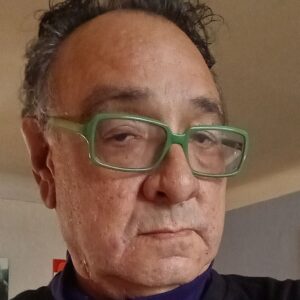
By Rudolfo Carrillo
Somewhere back in the illuminated and moving past, in the world of the cinema, a certain director noted that freedom and filmmaking went together. Werner Herzog famously said, “If you want to do a film, steal a camera … Do not wait for the system to finance your projects”. Those two dictums reflect a vision that requires an uncompromising and consistent penchant for creation; that vision is more than notable when it comes to one of Herzog’s most able and apt celluloid successors, director Alejandro Montoya Marin.
To say that Marin has broken the forms of the past in order to reclaim and revise a cinematic culture that will again be vibrant and meaningful under his watchful eyes is an understatement. With a number of narratively accessible, photographically elegant, and astutely observant films such as The Unexpecteds, Millennium Bugs, and the short Get It already under wraps, Marin is more than just another up and coming filmmaker. He represents a filmic future that is guaranteed to be gloriously cinematic in the best ways we can imagine.
¡Viva New Mexico! sat down with Alejandro to talk about his current work, the work of today’s film directors making their way through a post-Hollywood landscape, and the meaning of it all when looked at through his inimitable lens.
¡Viva New Mexico!: You’re on the path of an auteur, another Scorsese or Herzog in the making. Your work as a filmmaker is currently affecting audiences and the filmmaking community as well. In other words, you’ve become influential of late. How did you make that happen?
Alejandro Montoya Marin: Thanks, that’s nice of you to say such things. I went down the very traditional route of falling in love with movies. I don’t have any family members involved in the industry. I don’t have any of those types of connections, but I do have a connection with film. I remember being young and being very enamored with film and how it made me feel. Anytime there was too much normality or too much mundaneness in my small town of Laredo, Texas — where I was born — I began to realize that you can insert a tape in a machine and go on an adventure, go anyplace in the world, anywhere in the universe. Film really made me see the possibilities of finding other places and meeting other people. I love the human condition.
Why film?
I get bored very quickly. I feel that film is the only thing that really interested me. I was like, this is what I want to do for the rest of my life. For me, this was a clear passage, a clear path forward. So the adventure was, how do you do that?
When did you start having these cinematic thoughts?
We moved to Mexico when I was 12. Mexico’s a huge part of my life: who I am, how I say my name, the stories I tell, the dynamics of those stories have been shaped by my lived experience. It all has to do with my family, with my upbringing, the beautiful people here. Here in Mexico, I owned a video store in 2007, called Quick Stop Videos. I thought that was the closest I could get to my dream.
What happened next?
I’m very impulsive, which isn’t always that highly recommended. People said I should be more analytical, but I thought, ‘If you wait, you get cold feet’ … that’s how I see shit. So I went to Vancouver, to film school [at the prestigious Vancouver Film School].
What did those studies, that education, reveal to you?
I think when you love something so much, there aren’t really any boundaries [at first]. It’s taken me a while, I’m 44 now, but I began to think of planting a seed that will later grow. I was always about ‘I need results now, now!’ but that attitude has kinda taken a backseat. What have I learned? Well, a lot about myself; my struggle is going to be learning to become more patient. That’s the best way to be a leader, to be more patient. The way you move the boat when you are younger is that you think the more authority you use, that’s how you move forward. But over time you realize the best leaders are the ones that cause the least amount of struggle, and that’s what really keeps the boat moving through the water. I learned that being a leader doesn’t necessarily mean me at the top of the rock. If you get to the top of that rock, then you have a duty to help the people who are down below the rock, the people who are helping you. My education gave me a lot of empathy.
Where is that knowledge taking you now?
I have several new projects, man. It’s been very busy for me. I have two feature films that we’re cooking up, one this year, and then one for the following year. And then I’ve got a documentary in the works and a music video too. I’ve been blessed, and I say blessed now, because I feel that something is happening. When you’re younger and you’re starting out, it seems like it takes forever, and so you start judging yourself or second-guessing yourself and think, ‘I didn’t do this right’ or ‘maybe I should quit.” or Am I just doing this because of my own delirium?’ … but then things just start clicking, things start working and people start calling you. And so that’s the job you take, the job you do right. Good things happen. I’m writing my first Spanish-language feature here in Monterrey, so things are great! I’m trying to give back by speaking and holding film classes at the university here. I’m going to do a class soon, with about 500 students, about [making] short films. When you’re young, you think of yourself as Luke Skywalker. Later on, you realize that you’re Obi-Wan.
When are you going to come back to New Mexico, Obi-Wan, I mean, Alejandro?
I’m talking to someone about doing a movie in New Mexico this summer! I love New Mexico, I’ll always try to return when I can.
What would you like to see happen for film culture in New Mexico? What about Hollywood?
I think that people who are complaining about Hollywood need Hollywood to make their art. I’ve never been part of that system, I don’t need them to tell me to be creative, so I make my own movies, I write and direct them. The problem New Mexico has is that it doesn’t help its own creatives. They’re okay with us just being the ‘employees’. And I don’t like that. They have all sorts of tax credits and rebates available but they tend to go outside of the pond.
How can filmmakers like you change that situation, reclaim what we need, and make it ours?
You can’t change the system on the first day, but you can change it slowly, over time. I think things like this, interviews, supporting fellow creatives, going to the movies … you know how people can help? Come and watch my movies! The Unexpecteds is on TUBI, it’s free! Watch the film, tag it on Instagram. That’s what we need; people need to stop supporting [the likes of] Chappell Roan or the Bachelorette.
Because there’s real art out there too, que no?
Yeah, stop supporting the ‘manosphere’, start supporting real artists! I think everyone is aware of what’s going on. I think the real problem is that too many people think Netflix is going to save them. But when Netflix stops knocking at your door, then what? It’s the perfect time for those people to get together and start making their own movies. It’s time to network.
Follow Alejandro Montoya Marin on Instagram.